
Customer Feedback & Reviews
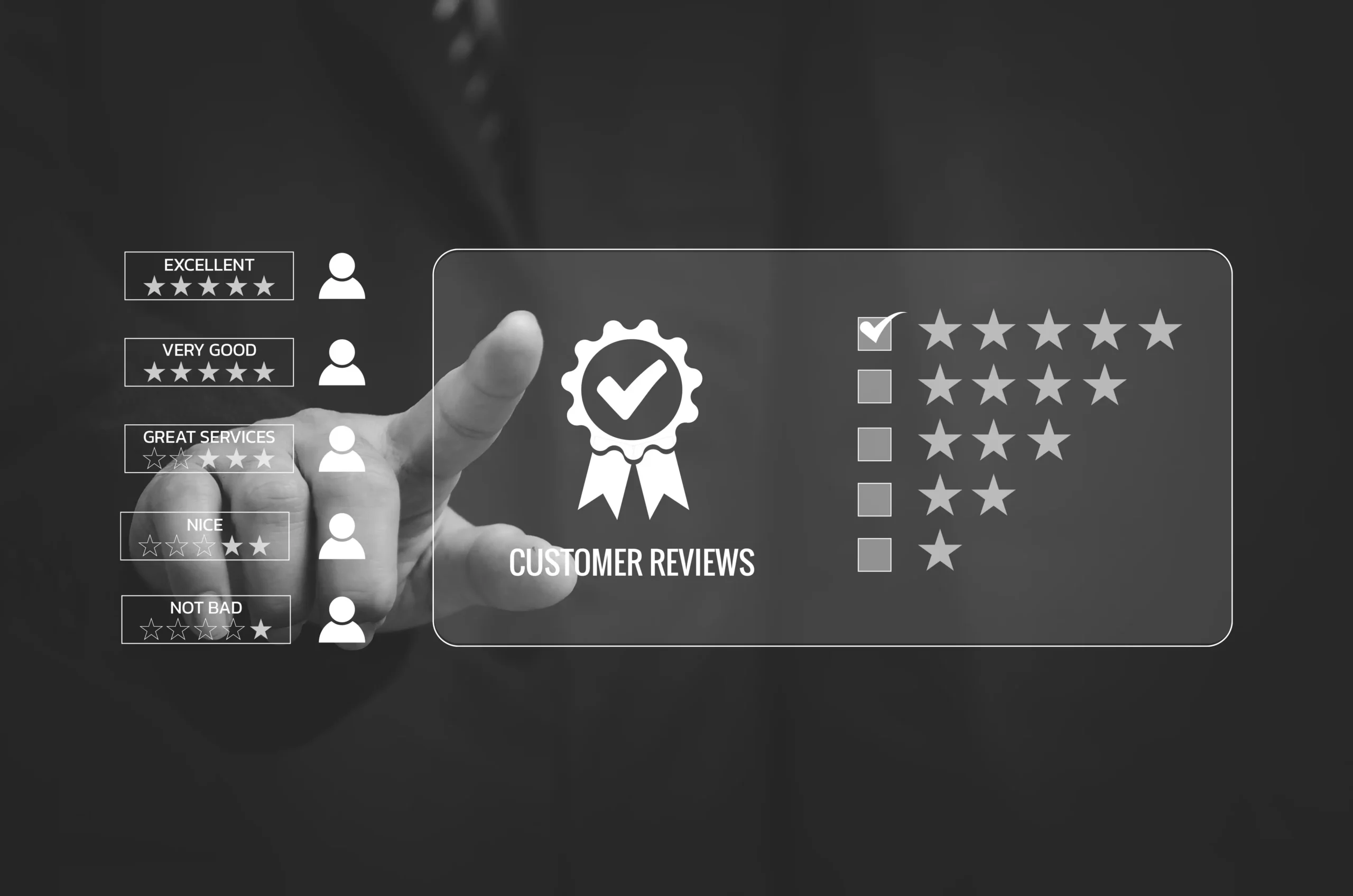
Customer Feedback & Reviews for Store For Shops: The Complete Guide to Leveraging Social Proof for E-Commerce Growth
Introduction: The Sales Force You’re Not Using
Most e-commerce businesses are obsessed with generating new traffic through ads and SEO while completely neglecting the most powerful conversion tool they already have: the voices of their existing customers.
At Store For Shops, we made this mistake for our entire first year. We had 400+ satisfied customers and zero systematic way to capture, display, or leverage their feedback. No reviews on our website. No testimonials. No case studies. No social proof whatsoever.
The wake-up call came during a sales call. A potential customer asked what our other customers said about us. We stammered through a vague answer. They thanked us and went with a competitor whose website was plastered with dozens of detailed customer reviews. That single loss cost us a ₹2.8 lakh order.
So we built a comprehensive customer feedback system from scratch.
Before: 0 reviews, 1.8% conversion rate, ₹38,000 average deal size, customers hesitant to commit. After: 450+ reviews, 4.7/5 average rating, 3.2% conversion rate, ₹44,000 average deal size. The revenue impact was ₹1.8 crore additional annual revenue — from the same traffic volume, just by adding credible social proof.
This guide shares the complete review system we built at Store For Shops: from collection to display to leveraging for growth.
🟡 Important Note
The financial data, sales metrics, and performance examples shown on this page are for illustration purposes only. They’re meant to help you understand our processes, tools, and reporting methods — not to represent our company’s actual financial performance.
At Store For Shops, we believe real learning happens when concepts are explained with clear, relatable examples. That’s why we’ve used sample numbers and hypothetical scenarios to make things easier to follow. Please keep in mind that these figures are fictional and simplified to demonstrate how our systems work behind the scenes.
If you’re reviewing this information to understand how we track sales or analyze performance, focus on the methods and workflows, not the specific values shown. The actual business data we use internally is confidential and managed securely to protect both our company and our customers.
Why Customer Reviews Drive Conversion
Understanding the psychology behind social proof helps you apply it strategically rather than haphazardly.
Humans look to others to validate their decisions, especially when making unfamiliar purchases, spending significant money, evaluating new suppliers, or choosing between multiple options. This is particularly powerful in B2B retail where purchase decisions are considered and the stakes are high — a retailer investing ₹50,000 in gondola shelving is not buying on impulse.
The business impact at Store For Shops is measurable and significant. Product pages with no reviews convert at 2.1%. Pages with 1–4 reviews convert at 2.6%. Pages with 5–9 reviews reach 3.2%. Pages with 10 or more reviews reach 3.8% or above. That progression from zero to ten reviews represents an 81% improvement in conversion from the same traffic.
Reviews also reduce customer acquisition cost. When pages convert better, you need less ad spend per customer. When customers arrive having read reviews, they’re partially pre-sold before they interact with your sales team. And customers who leave reviews have a 67% higher lifetime value than non-reviewers — they’re more engaged, more loyal, and buy more over time.
The types of social proof that matter most for retail businesses are written reviews with specific detail, video testimonials, case studies with before-and-after results, customer-submitted photos of products in use, third-party platform ratings (Google, Facebook, JustDial), and aggregate review counts displayed prominently across your site.
Building Your Review Collection System
Reviews don’t arrive by accident. You need a systematic, timed collection process.
Timing Your Review Requests
The optimal window for requesting a review is 10–14 days after delivery. By this point, the customer has installed their fixtures and formed a genuine opinion, the experience is still fresh and enthusiasm is high, and any installation issues have likely surfaced and (ideally) been resolved.
Asking on day one or two — before the product has been used — generates either declines or unhelpfully vague reviews. Asking after 60 days generates brief, forgettable responses from customers who have mentally moved on.
If a customer proactively contacts you with praise at any point, ask for a review immediately. Strike while the enthusiasm is genuine and fresh.
Crafting Review Requests That Get Responses
The difference between a review request that gets a 3% response rate and one that gets a 12% response rate is almost entirely in how it’s written.
A poor review request is generic: “Please leave us a review.” No context, no motivation, no guidance. It feels like an administrative task rather than an invitation.
A high-performing review request does several things: it acknowledges the customer by name and references their specific product and timeline, it explains why their review helps others (framing it as a contribution rather than a favour to you), it provides guidance on what to include (installation experience, quality versus expectations, whether they’d recommend it), it offers a transparent incentive (₹500 off next order — same regardless of rating), it provides a recovery path encouraging unhappy customers to contact you first before leaving a public review, and it comes from a named person at the company rather than a generic sender.
The recovery path element deserves special emphasis. When unhappy customers are actively encouraged to reach out to you before writing a review, you get the opportunity to resolve their issue. Many who would have written a three-star review become five-star reviewers after their problem is handled well.
Multi-Channel Collection
Email is the foundation of review collection but shouldn’t be the only channel. A WhatsApp message sent one to two days after the email reaches customers on the platform where most Indian retailers spend the majority of their day. Response rate from WhatsApp is significantly higher than email — closer to 40% versus 52% on email, but WhatsApp actually drives higher completion among those who respond.
For high-value orders above ₹1,00,000, a personal phone call from the sales rep or account manager achieves a 45% review rate — the personal touch is simply more effective at this value level. A physical insert card included in every shipment with a QR code generates a modest additional 3%, but it’s passive and costs almost nothing.
The combined multi-channel approach achieves an 18% overall review rate at Store For Shops, compared to a typical industry average of 3–5% with no systematic collection process.
Incentivising Reviews Ethically
Offering an incentive increases review volume three to six times without compromising authenticity — but only if it’s done correctly.
The ethical approach: offer the same incentive (₹500 off next order) regardless of what star rating the customer gives. Disclose the incentive publicly on your website. Never ask customers to change negative reviews. Never offer higher incentives for higher ratings.
The unethical approaches that destroy trust: paying only for positive reviews, offering larger rewards for five-star reviews, pressuring customers to change their ratings, or hiding the incentive programme from other visitors.
Transparency is the key. When your website clearly states that reviews were collected through a programme that offers a discount for honest feedback, customers reading those reviews trust them more — not less. They understand there’s an incentive, but they also understand that negative reviews are included, which signals that the system is genuine.
Making Review Submission Frictionless
The review completion rate among customers who click your review link is determined almost entirely by how much friction exists in the process.
A bad review process requires account creation, a multi-step form, email verification, and five or more mandatory fields. This drives completion rates down to 15% of those who click.
A well-designed review process is pre-authenticated via the personalised link so the customer lands directly on their review form, pre-fills their name, email, and order details so they don’t need to type, requires only a star rating (everything else is optional but guided), allows photo upload via drag-and-drop or camera on mobile, and shows the discount code immediately upon submission.
Our completion rate among customers who click the review link is 68% — nearly five times higher than a poorly designed process. The principle is simple: every field you add, every step you create, every piece of friction you introduce costs you completions. The goal is to make the review as close to a single-click experience as possible while still capturing enough information to be useful.
Displaying Reviews for Maximum Conversion Impact
Collecting reviews is only half the work. Strategic display turns that social proof into revenue.
Where to Place Reviews
The homepage needs a trust signal above or near the fold. A prominent aggregate rating, review count, and one or two strong testimonials reduce bounce rates by establishing credibility immediately.
Product pages are where reviews do the most work. Display the star rating and review count near the product title so it’s visible before customers scroll. Show two to three highlighted reviews after the product description to address common concerns. Provide a full reviews section lower on the page with sorting and filtering. Products with ten or more reviews consistently convert at more than double the rate of products with fewer than three.
Category pages should show star ratings on each product card — this helps customers narrow their consideration set and increases click-through to individual product pages.
The cart page is where customers sometimes get cold feet. A single strong review reassurance — “These are fantastic quality. You won’t regret this purchase.” — placed near the checkout button reduces cart abandonment.
The checkout page is the final psychological barrier. A brief social proof element near the purchase button (“Store For Shops delivered exactly as promised — Verified Customer”) reduces abandonment from payment anxiety.
How to Display Reviews Effectively
Display review count alongside star rating — “4.7/5 (450 reviews)” is far more credible than “4.7/5” alone. Volume builds confidence.
Include reviewer details: full name, store name, and city. “Rajesh Kumar, TechZone Electronics, Mumbai” is significantly more credible than “Anonymous User.” Specificity signals authenticity.
Show the rating distribution — the percentage breakdown of five-star through one-star reviews. A distribution showing 68% five-star and 9% one-to-three-star looks authentic. All five-stars looks suspicious.
Feature verified purchase badges to distinguish genuine customers from anonymous submissions.
Display reviews sorted by most helpful by default, not most recent. Helpful reviews tend to address common concerns and objections, which is more valuable to a prospective customer than chronological ordering.
Handling Negative Reviews
Negative reviews are inevitable. How you respond matters more than their existence.
At Store For Shops, about 9% of reviews are three-star or below. This distribution is actually positive — 100% five-star ratings look fabricated and often reduce conversion rather than increasing it.
The protocol for negative reviews: respond publicly within 24 hours acknowledging the issue, then resolve it privately via phone or email with a specific solution (replacement, refund, or service visit), then update your public response after resolution to show what was done.
The outcome of this process is that approximately 70% of customers who left a negative review update it to four or five stars after their issue is professionally resolved. These updated reviews — the ones that show an initial problem and a satisfying resolution — are often more persuasive than unblemished five-star reviews. They demonstrate that you make mistakes (human) but fix them quickly (reliable).
The core principles: respond quickly, acknowledge without defensiveness, take the conversation offline, provide a specific solution rather than vague assurances, and follow up publicly after resolution. Never argue publicly, never blame the customer, and never offer incentives specifically to change a review rating.
Leveraging Reviews Beyond Your Website
Reviews are marketing assets, not just website features.
In Google Ads, review extensions showing your aggregate rating and review count consistently achieve 10–15% higher click-through rates than ads without them. In Facebook and Instagram ads, creative featuring a customer testimonial alongside a store photo converts at more than double the rate of product-only creative.
Email campaigns leading with social proof perform significantly better than product-focused emails — open rates run 10 percentage points higher and click rates nearly double. The framing “see what 450+ retailers are saying” addresses the implicit question every prospect carries: “but does it actually work?”
Case studies are the deepest form of social proof. They convert pages from 3.2% without them to 8.2% at Store For Shops — a 156% improvement. The key elements are a relatable challenge, a specific solution, honest implementation detail, and quantified results with a named customer willing to stand behind the numbers. Reaching out to your most enthusiastic reviewers and offering to feature their store in a professional photoshoot alongside a case study generates 15% participation — and creates content that works in sales proposals, email campaigns, and paid advertising simultaneously.
In the sales process, reviews reduce the sales cycle by 32% and improve close rates by 56%. A salesperson who can pull up a relevant customer testimonial on screen during a call, or include three to four relevant case study results in a proposal, does far less explaining and far more closing. The credibility work is already done.
Measuring Your Review Programme
Track collection metrics (submission rate as a percentage of customers contacted, time from purchase to review submission, photo inclusion rate), quality metrics (average rating, percentage of reviews that include text, response rate and speed), and impact metrics (conversion rate on pages with versus without reviews, average order value for customers who read reviews, organic search position for review-rich pages).
The most important business metrics are conversion rate improvement, customer acquisition cost change, and revenue attributed to review-influenced sales. At Store For Shops, pages with reviews convert at 3.8% versus 2.1% without — an 81% improvement — and this single programme generates 40x ROI on the investment in incentives and management time.
Conclusion: Your Customers Are Your Best Sales Team
The most important principle in this entire guide: your customers’ voices are more powerful than your marketing.
Nothing builds trust like another retailer saying “this worked for me.” Not ad copy, not product photography, not competitive pricing. When a store owner in Mumbai is deciding whether to place a ₹50,000 fixture order with Store For Shops, what convinces them is seeing that 450 other store owners across India have already done exactly that — and rated the experience 4.7 out of 5.
The opportunity exists in every retail business right now. Your satisfied customers would happily write a review if you asked them at the right time, in the right way, with the right incentive. Each review is a sales conversation happening on your behalf, 24 hours a day, permanently.
Key Takeaways
- Reviews systematically collected and displayed can improve conversion rates by 50–100% without any increase in traffic
- The optimal time to request a review is 10–14 days post-delivery — early enough for fresh enthusiasm, late enough for genuine experience
- A transparent incentive (same discount for any rating, publicly disclosed) increases review volume three to six times without compromising authenticity
- Frictionless submission forms with pre-filled fields and single required inputs achieve 68% completion among customers who click the link
- Display reviews near decision points: product title, after product description, on cart page, and near checkout button
- Negative reviews handled professionally (acknowledge, resolve, update publicly) convert 70% of unhappy reviewers into four or five-star reviewers
- Case studies, video testimonials, and user-submitted store photos are the highest-conversion social proof formats
- Reviews reduce sales cycle length and improve close rates — the social proof does credibility work that sales teams previously had to do manually
Browse our complete range of retail display fixtures, gondola shelving, mannequins, clothing racks, and shop fittings at storeforshops.com — and read 450+ verified reviews from Indian retailers who’ve already built their stores with our help.
Frequently Asked Questions About Customer Reviews for Indian Retail Businesses
Q: How many reviews do I need before displaying them publicly?
A: Start displaying reviews immediately, even with just one or two. Any reviews are better than none — they show you’re willing to be evaluated. Early reviews often come from your most enthusiastic customers and tend to be genuinely positive. A note saying “We’re growing our review collection — be one of our first reviewers!” turns low volume into an authenticity signal. The goal is to reach 10+ reviews per product and 50+ total as quickly as possible, but don’t wait to start displaying what you have.
Q: Should I offer an incentive for reviews, and is that ethical?
A: Yes, with the right structure. Offer the same incentive (a store credit or discount) regardless of what rating the customer gives, disclose the incentive publicly on your website, and never offer higher rewards for higher ratings. This approach increases review volume three to six times while maintaining authenticity — negative reviews still appear, distribution looks natural, and the transparency actually increases trust among readers. The unethical version (paying only for positive reviews or hiding incentives) is both legally risky under India’s Consumer Protection Act 2019 and easily detected by customers who read reviews.
Q: How do I respond to a negative review professionally?
A: Respond publicly within 24 hours acknowledging the specific issue without defensiveness. Offer to resolve it offline via phone or WhatsApp. Follow through with a concrete solution — replacement, refund, or service. Then update your public response to show what was done. The goal is not to remove or suppress the negative review but to demonstrate that you take problems seriously and fix them. How you handle criticism builds more trust than whether you receive any.
Q: How do I get customers to write detailed reviews rather than just star ratings?
A: Provide prompts in your review request email suggesting what to include — how easy installation was, how quality compared to expectations, how it’s working in their specific store type. Show a character counter with an encouraging note like “50 more characters makes this really helpful.” Feature detailed reviews prominently on your site so customers see what good reviews look like. Offer a slightly higher incentive for reviews that include text and photos. At Store For Shops, 82% of submitted reviews include detailed text using this approach.
Q: What’s the ROI of a systematic review programme for a retail business?
A: For a retail business generating ₹50 lakh monthly, a well-run review programme typically contributes an 18–25% increase in effective revenue through improved conversion rates, higher average order values (customers who read reviews buy more confidently), and reduced customer acquisition costs (better-converting pages require less ad spend per customer). Against a programme cost of ₹60,000–90,000 monthly in incentives and management time, the returns are consistently in the 10:1 to 20:1 range.
Q: How do Store For Shops products connect with a review strategy?
A: The connection is direct: our gondola shelving, display stands, mannequins, and shop fittings are the physical products that Indian retailers photograph, write about, and recommend to their peers. A boutique owner in Bangalore who installs our wall-mounted shelving and sees a 35% sales increase has a genuine story worth sharing. Our review programme is built around making it easy for those retailers to share that story — and for store owners who are still deciding whether to invest in professional fixtures to find it. The combination of quality products worth reviewing and a systematic way to capture and display those reviews is what drives the social proof flywheel. Visit storeforshops.com to browse our full range and read verified reviews from retailers across India.