
Our Philosophy Of Automation.

Human-Centred Retail Automation: Why Technology Should Empower, Not Replace People
Introduction: Rethinking Retail Automation
The retail industry stands at a crossroads. While competitors rush toward full automation promising to eliminate human involvement, we at Store For Shops have taken a fundamentally different path. Our approach centers on one revolutionary concept: automation should amplify human potential, not replace it.
In an era where 73% of retail executives report feeling overwhelmed by technology choices, we’ve developed what we call Human-Centered Automation Philosophy – a systematic approach that puts people first while leveraging intelligent systems to handle the mundane, repetitive tasks that drain productivity and creativity.
This isn’t just about implementing technology for technology’s sake. It’s about creating a retail ecosystem where automation serves as an invisible foundation, empowering store owners, employees, and customers to focus on what truly matters: meaningful connections, strategic decisions, and business growth.
What Is Human-Centred Automation Philosophy?
The Core Principle
Human-Centred Automation Philosophy represents a fundamental shift from traditional retail technology implementation. Instead of asking “How can we automate everything?”, we ask “How can we use automation to make humans more effective?”
This philosophy rests on three foundational pillars:
Simplification Over Complication
Every automated system we implement must reduce complexity, not add layers of confusion. If a process requires extensive training or creates more steps, it fails our human-first test.
Empowerment Over Replacement
Technology should enhance human capabilities – better decision-making, improved accuracy, faster insights – rather than eliminating human involvement entirely.
Clarity Over Opacity
All automated processes must be transparent, traceable, and understandable. No black boxes, no mysterious algorithms, no hidden decision-making processes.
The Problem with Traditional Retail Automation
Most retail automation solutions focus on eliminating human touchpoints entirely. This approach creates several critical problems:
- Loss of Customer Connection: Over-automation removes the human element that builds customer loyalty
- Reduced Flexibility: Rigid systems can’t adapt to unique situations or customer needs
- Employee Disengagement: Workers feel replaceable rather than empowered
- Hidden Complexity: “Simple” systems often hide complicated processes that break down unexpectedly
Our philosophy directly addresses these issues by designing automation that enhances rather than replaces human judgment, creativity, and relationship-building capabilities.
The Purpose Behind Every Automation: Strategic Intent
Reducing Repetitive Manual Tasks
The most immediate benefit of our automation philosophy centres on eliminating time-consuming, error-prone manual processes. However, we don’t automate tasks simply because we can – each automation must meet specific criteria:
Task Suitability Assessment:
- High repetition frequency (performed multiple times daily)
- Low creative requirement (follows consistent rules)
- Error-prone when done manually
- Time-consuming relative to business value
Examples in Practice:
- Inventory Synchronization: Automatically updates stock levels across multiple sales channels, eliminating manual spreadsheet updates that consume 2-3 hours daily
- Barcode Management: Generates and assigns unique barcodes to new products, reducing SKU creation time from 15 minutes to 30 seconds
- Price Updates: Propagates pricing changes across all systems instantly, preventing the discrepancies that cost retailers an average of 3-5% in lost revenue
Increasing Accuracy and Accountability
Manual processes introduce human error at multiple points. Our automation systems create accuracy improvements while maintaining full traceability:
Digital Paper Trail: Every automated action generates a complete audit trail including:
- Timestamp of action
- User or system that triggered the change
- Before and after states
- Reason code or trigger event
This level of detail enables rapid troubleshooting and provides complete accountability without burdening staff with additional documentation tasks.
Error Prevention Mechanisms: Rather than catching errors after they occur, our systems prevent them through:
- Validation Rules: Automatic checks that prevent impossible data entries (negative inventory, duplicate SKUs, etc.)
- Range Verification: Price changes outside normal parameters trigger review workflows
- Dependency Mapping: Systems understand product relationships and flag potential conflicts
Maintaining Pricing Transparency and Product Clarity
Price management represents one of the most complex challenges in retail operations. Our automation approach ensures complete transparency while reducing administrative burden:
Real-Time Price History: Every price change is logged with full context, creating a comprehensive pricing timeline that serves multiple purposes:
- Customer transparency (they can see pricing trends)
- Margin analysis (identify pricing patterns that maximize profitability)
- Competitive positioning (track how prices compare over time)
- Regulatory compliance (maintain required pricing records)
Automated Competitive Intelligence: Our systems monitor competitor pricing and market conditions, providing alerts when significant changes occur. However, pricing decisions remain entirely human-driven – automation simply provides better information for decision-making.
Built-in Digital Discipline: The Framework That Ensures Success
What Is Digital Discipline?
Digital Discipline represents our systematic approach to implementing automation with strict adherence to clarity, consistency, and human oversight. Unlike ad-hoc technology adoption, Digital Discipline creates a comprehensive framework that ensures every automated system serves the broader goal of human empowerment.
Core Components of Digital Discipline
Clean Data Over Guesswork
Poor data quality undermines even the most sophisticated automation systems. Our Digital Discipline approach prioritizes data integrity through:
- Single Source of Truth: Each piece of information has one authoritative source, eliminating conflicting data across systems
- Automated Data Validation: Real-time checks ensure data meets quality standards before entering the system
- Regular Data Audits: Systematic reviews identify and correct data quality issues before they impact operations
Process Consistency Over Last-Minute Fixes
Reactive management creates chaos and stress. Our automation creates predictable, consistent processes that eliminate firefighting:
- Standardized Workflows: Every common task follows the same process, reducing training time and eliminating confusion
- Exception Handling: Clear procedures for unusual situations prevent disruptions
- Continuous Improvement: Regular process reviews identify opportunities for refinement
Real-Time Visibility for Customers
Modern customers expect transparency and immediate information. Our systems provide real-time updates that build trust and reduce support burden:
- Live Inventory Status: Customers see accurate stock levels, preventing overselling disappointments
- Order Tracking: Detailed progress updates from order placement through delivery
- Product Information: Complete specifications, pricing history, and availability data
Partner Integrity Through Documentation
Strong supplier and vendor relationships depend on clear communication and reliable information sharing:
- Automated Vendor Communications: Reorder alerts, inventory updates, and performance metrics shared automatically
- Pricing Logs: Complete records of all pricing negotiations and changes
- Performance Tracking: Objective metrics on delivery times, quality, and service levels
Implementation Without Disruption
Digital Discipline recognizes that sudden changes disrupt business operations and overwhelm staff. Our implementation approach minimizes disruption through:
Gradual Rollout Strategy:
- Phase 1: Backend automation (invisible to daily operations)
- Phase 2: Staff-facing tools (after backend stability is proven)
- Phase 3: Customer-facing features (after internal adoption is complete)
Comprehensive Training and Support:
- Role-specific training focused on how automation helps individual job functions
- Ongoing support to address questions and concerns
- Regular feedback sessions to identify improvement opportunities
Minimalist Design: Maximum Purpose with Minimal Complexity
The Problem with Bloated Systems
Many retail technology solutions suffer from feature bloat – adding countless options and capabilities that overwhelm users rather than helping them. Research shows that employees use less than 30% of available features in most software systems, indicating poor design focus.
Our Minimalist Approach
We intentionally design automated systems with ruthless focus on essential functionality:
Clean UI for Faster Decisions
Interface design prioritizes the most common tasks while keeping advanced features accessible but not prominent:
- Primary Actions: Most frequent tasks appear prominently and require minimal clicks
- Secondary Functions: Available through clearly marked but less prominent access points
- Advanced Features: Accessible to power users without cluttering the primary interface
Smart Defaults and Suggestions
Rather than forcing users to configure every option, our systems learn from usage patterns and suggest optimal settings:
- Adaptive Menus: Most-used features appear first based on individual usage patterns
- Intelligent Recommendations: System suggests optimal settings based on business type and historical data
- Context-Aware Help: Assistance appears when needed without interrupting workflow
Examples of Minimalist Automation in Action
Barcode-Linked Product History:
A simple barcode scan reveals comprehensive product information including pricing history, vendor details, and sales performance. The interface shows essential information immediately while making detailed data available with one additional click.
Real-Time Price History Charts:
Customers and staff can access pricing trends through a clean, easy-to-understand chart that shows price changes over time. No complex analytics training required – just clear, actionable information.
Smart Dispatch Optimization:
The system automatically calculates optimal delivery routes based on location, traffic patterns, and delivery priorities. Staff see the recommended route and can accept it with one click or modify it if special circumstances require human judgment.
Why Retail Automation Matters: The Business Case
The Cost of Manual Processes
Manual retail operations create hidden costs that compound over time:
Time Inefficiencies:
- Average retailer spends 15-20 hours weekly on manual inventory tasks
- Price updates require 2-3 hours across multiple channels
- Manual order processing takes 3x longer than automated systems
Error Rates and Their Impact:
- Manual data entry averages 1 error per 300 keystrokes
- Inventory discrepancies cost retailers 1.1% of annual revenue
- Pricing errors result in 3-5% margin loss on affected products
Scalability Limitations:
- Manual processes create bottlenecks that limit growth
- Staff burnout increases when repetitive tasks dominate their time
- Customer service suffers when employees focus on administrative tasks
The Strategic Advantages of Human-Centred Automation
Enhanced Decision-Making Capability: Automation provides better information faster, enabling more informed decisions:
- Real-time sales data helps identify trending products
- Automated competitor analysis reveals market opportunities
- Predictive analytics suggest optimal inventory levels
Improved Customer Experience: Customers benefit from automation in ways that strengthen relationships rather than replacing human interaction:
- Accurate inventory information prevents disappointment
- Faster order processing and shipping
- Consistent pricing across all channels
- Better product recommendations based on purchase history
Operational Excellence: Well-designed automation creates consistent, reliable operations that support growth:
- Reduced error rates improve customer satisfaction
- Consistent processes enable easier staff training and management
- Better data enables continuous improvement initiatives
Automation That Grows With Your Business
Scalable Architecture Design
Our automation systems are built to accommodate business growth without requiring complete system replacements:
Modular Components:
Each automated function operates independently while integrating seamlessly with others. This design allows businesses to:
- Add new capabilities without disrupting existing operations
- Customize automation levels based on current needs
- Expand functionality as business requirements evolve
Flexible Integration Capabilities:
As businesses grow, they often need to integrate with new systems, suppliers, or sales channels. Our automation platform accommodates these changes through:
- Open API architecture that connects with most retail systems
- Standard data formats that facilitate easy information sharing
- Customizable workflows that adapt to unique business processes
Growth Stage Adaptation
Single Location Optimization: For businesses starting with one location, automation focuses on:
- Streamlined inventory management
- Efficient customer service processes
- Basic sales analytics and reporting
- Simple vendor communication
Multi-Location Scaling: As businesses expand to multiple locations, automation evolves to provide:
- Centralized inventory visibility across all locations
- Standardized processes that ensure consistency
- Performance comparison tools for location optimization
- Coordinated marketing and promotional campaigns
Enterprise-Level Sophistication: Large-scale operations benefit from advanced automation features:
- Predictive analytics for demand forecasting
- Sophisticated supplier relationship management
- Advanced customer segmentation and personalization
- Complex logistics optimization across multiple channels
Supporting Business Model Evolution
Retail businesses often evolve their models as they grow – from purely brick-and-mortar to omnichannel, from local to regional or national. Our automation systems support these transitions:
Channel Integration:
- Seamless inventory synchronization across online and offline channels
- Unified customer experience regardless of purchase method
- Coordinated pricing and promotional strategies
Geographic Expansion:
- Automated compliance checking for different regional regulations
- Localized pricing and inventory management
- Regional performance analytics and optimization
Real-World Implementation: How Our Automation Philosophy Works
Barcode-Based Inventory Updates
Traditional inventory management requires manual counting, spreadsheet updates, and cross-referencing multiple systems. Our automated approach transforms this process:
The Traditional Process:
- Physical inventory count (2-3 hours monthly)
- Manual data entry into spreadsheets (1-2 hours)
- Cross-checking with sales systems (30-60 minutes)
- Identifying and resolving discrepancies (varies widely)
- Updating all sales channels individually (1-2 hours)
The Automated Process:
- Scan products during regular operations (no additional time)
- System automatically updates inventory in real-time
- Automated alerts flag unusual changes for review
- All channels update instantly
- Monthly reconciliation takes 15-20 minutes
Human Value Addition: Rather than eliminating human involvement, this automation allows staff to focus on:
- Analyzing sales trends and customer preferences
- Developing better product displays and merchandising
- Providing personalized customer service
- Strategic planning for inventory optimization
Instant Invoice Generation
Invoice creation traditionally involves manual data entry, calculation verification, and formatting. Our automation handles the mechanical aspects while preserving human oversight:
Automated Components:
- Order details automatically populate from sales system
- Pricing, taxes, and totals calculate automatically
- Customer information pulls from database
- Invoice formatting follows consistent templates
- Digital delivery occurs immediately upon completion
Human Decision Points:
- Review for special circumstances or custom pricing
- Add personalized notes or special instructions
- Approve significant discounts or adjustments
- Choose delivery method based on customer preferences
Vendor-Side Auto-Alerts for Reordering
Supply chain management involves monitoring inventory levels, predicting demand, and timing reorders optimally. Automation handles monitoring and calculation while humans make strategic decisions:
Automated Monitoring:
- Continuous tracking of inventory levels across all products
- Sales velocity analysis to predict depletion timing
- Seasonal adjustment factors based on historical data
- Lead time consideration for each supplier
Human Strategic Input:
- Approval of suggested reorder quantities
- Modification based on upcoming promotions or market conditions
- Selection of suppliers when multiple options exist
- Decision on expedited shipping when necessary
Data-Backed Insights: Turning Information into Strategy
The Evolution from Data Collection to Strategic Intelligence
Many retail systems collect vast amounts of data but fail to transform it into actionable insights. Our automation philosophy emphasizes creating intelligence that directly supports human decision-making:
Automated Data Analysis:
- Sales pattern recognition across products, seasons, and customer segments
- Inventory turnover optimization suggestions
- Pricing elasticity analysis for margin optimization
- Customer behavior pattern identification
Human Strategic Application:
- Interpreting market trends and competitive positioning
- Developing promotional strategies based on customer insights
- Making product mix decisions for different seasons or locations
- Creating personalized customer experiences based on preference data
Practical Applications of Automated Intelligence
Smarter Buying Decisions: Our systems analyze sales history, seasonal patterns, and market trends to provide recommendations for:
- Optimal inventory levels by product and season
- New product opportunities based on customer demand patterns
- Supplier performance comparison for better vendor relationships
- Price points that optimize both volume and margin
Customer Experience Enhancement: Automation enables personalized experiences without requiring manual analysis:
- Product recommendations based on purchase history and browsing behavior
- Personalized pricing for loyalty program members
- Targeted promotional offers based on customer preferences
- Optimal timing for marketing communications
Operational Efficiency Improvements: Data analysis identifies opportunities for process optimization:
- Staff scheduling based on traffic patterns and seasonal demands
- Store layout optimization based on customer movement and purchase patterns
- Delivery route optimization for cost and speed improvements
- Maintenance scheduling based on equipment usage patterns
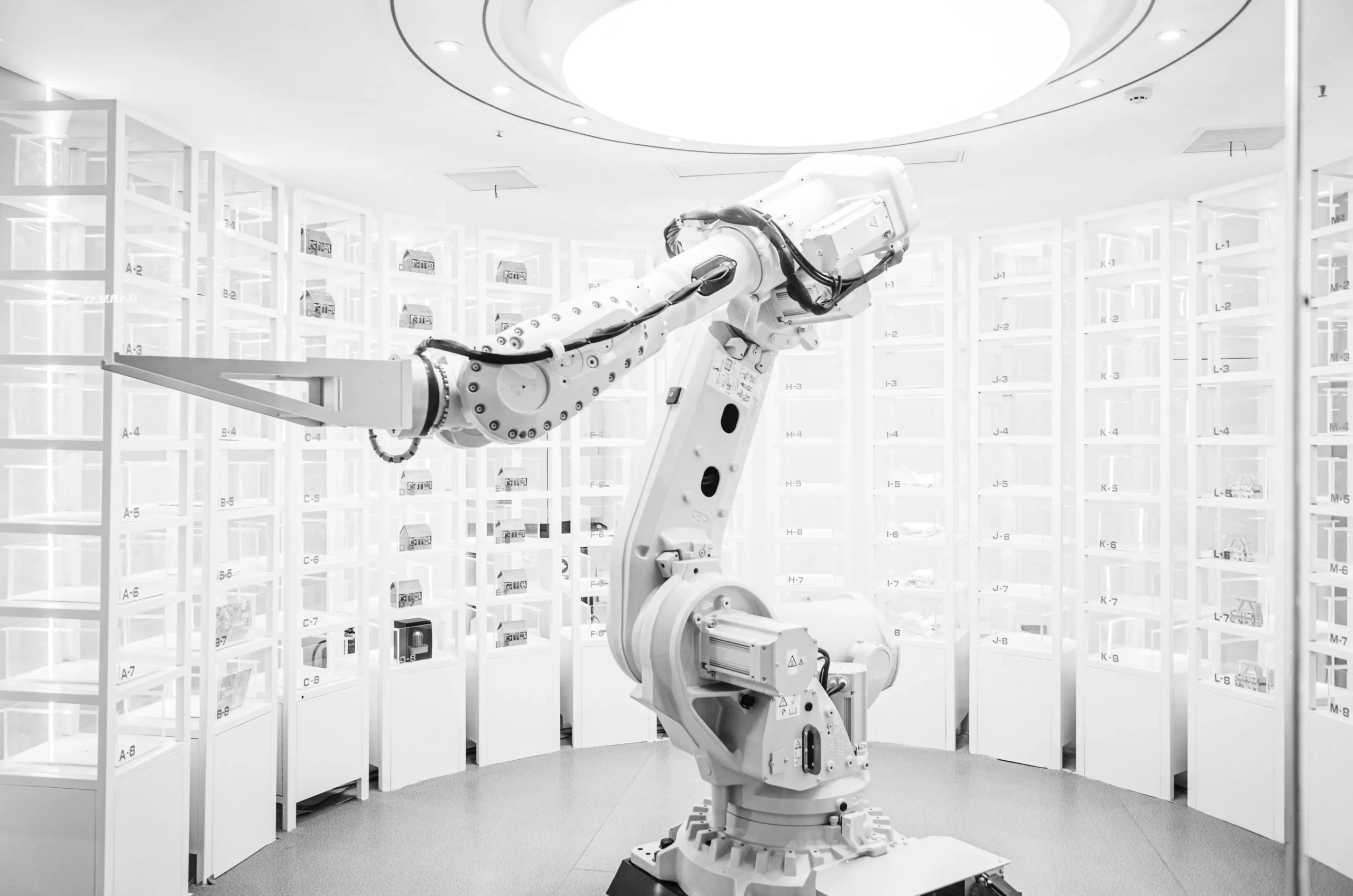
The Future of Human-Centered Retail Automation
Emerging Technologies Within Our Philosophy
As new technologies emerge, we evaluate them through our human-centered lens:
Artificial Intelligence and Machine Learning: Rather than replacing human judgment, AI enhances it by:
- Processing larger datasets than humans can analyze manually
- Identifying patterns that might escape human notice
- Providing predictions that inform but don’t replace human decisions
- Automating routine analysis to free humans for strategic thinking
Internet of Things (IoT) Integration: Smart sensors and connected devices provide real-time information while maintaining human oversight:
- Automated environmental monitoring (temperature, humidity) for product protection
- Customer traffic analysis for optimal staffing and layout decisions
- Equipment performance monitoring for predictive maintenance
- Energy usage optimization for cost control
Advanced Analytics and Visualization: Sophisticated analysis tools make complex data accessible to human decision-makers:
- Interactive dashboards that allow exploration of business performance
- Predictive models that forecast trends and outcomes
- Exception reporting that highlights items requiring attention
- Performance benchmarking against industry standards
Continuous Evolution and Improvement
Our automation philosophy includes continuous refinement based on real-world performance and changing business needs:
Regular System Assessment:
- Quarterly reviews of automation performance and user satisfaction
- Annual strategic planning sessions to align technology with business goals
- Ongoing training programs to ensure staff maximize automation benefits
- Customer feedback integration to improve automated services
Proactive Technology Updates:
- Regular software updates that improve functionality without disrupting operations
- Hardware refresh planning that prevents obsolescence issues
- Security updates that protect business and customer information
- Integration improvements that enhance system connectivity and reliability
Why Store For Shops’ Approach Matters: The Competitive Advantage
Differentiation in a Crowded Market
The retail technology market is flooded with solutions promising complete automation and human replacement. Our human-centered approach provides distinct advantages:
Sustainable Competitive Advantage:
- Technology that employees actually want to use increases adoption and effectiveness
- Customer relationships strengthen when technology enhances rather than replaces human interaction
- Flexible systems adapt to changing business needs rather than constraining them
- Transparent operations build trust with customers, suppliers, and employees
Measurable Business Results: Clients implementing our human-centered automation philosophy typically see:
- 25-40% reduction in time spent on administrative tasks
- 15-25% improvement in inventory accuracy
- 10-20% increase in customer satisfaction scores
- 30-50% reduction in new employee training time
Long-Term Sustainability
Unlike automation approaches that require constant updating and replacement, our human-centered systems provide long-term value:
Adaptability Over Obsolescence:
- Systems designed to evolve with business needs
- Human oversight ensures technology serves business goals rather than dictating them
- Modular design allows incremental improvements rather than complete replacements
- Focus on fundamental business processes rather than trendy features
Cost Effectiveness:
- Lower total cost of ownership through reduced training and support needs
- Higher user adoption rates maximize return on technology investment
- Reduced error rates and improved efficiency provide ongoing operational savings
- Scalable design eliminates need for costly system replacements during growth
Implementation Guide: Getting Started with Human-Centered Automation
Assessment and Planning Phase
Current State Analysis: Before implementing any automation, we conduct a comprehensive assessment of existing processes:
- Time and motion studies of current manual processes
- Error rate analysis and cost impact assessment
- Staff satisfaction surveys regarding current tools and processes
- Customer feedback analysis related to service delivery
Strategic Planning: Based on the assessment, we develop a customized automation strategy:
- Priority ranking of processes for automation based on impact and feasibility
- Resource allocation planning for implementation phases
- Staff training and change management planning
- Success metrics definition and measurement planning
Phased Implementation Approach
Phase 1: Backend Infrastructure
- Install core automation systems
- Migrate data and establish integrations
- Test all automated processes thoroughly
- Train key staff on new systems
Phase 2: Staff-Facing Tools
- Roll out user interfaces and daily-use tools
- Provide comprehensive staff training
- Gather feedback and make refinements
- Optimize workflows based on real usage
Phase 3: Customer-Facing Features
- Implement customer-visible automation features
- Launch customer communication about new capabilities
- Monitor customer adoption and satisfaction
- Continuous improvement based on feedback
Training and Support Structure
Role-Specific Training Programs:
- Management: Strategic dashboard usage and performance analysis
- Sales Staff: Customer-facing tools and relationship enhancement features
- Inventory Management: Automated reordering and stock optimization
- Customer Service: Enhanced information access and service tools
Ongoing Support Framework:
- 24/7 technical support for critical system issues
- Regular training updates as new features are added
- Monthly optimization sessions to improve system usage
- Quarterly business reviews to align technology with evolving needs
Measuring Success: KPIs for Human-Centered Automation
Quantitative Metrics
Operational Efficiency Improvements:
- Time savings on routine tasks (target: 25-40% reduction)
- Error rate reductions (target: 50-75% fewer manual errors)
- Process cycle time improvements (target: 30-50% faster completion)
- Cost savings from reduced labor and error costs
Business Performance Indicators:
- Inventory turnover rate improvements
- Customer satisfaction score increases
- Employee satisfaction and retention improvements
- Revenue growth enabled by operational efficiency gains
Qualitative Success Measures
Employee Experience Enhancement:
- Reduced stress levels from elimination of repetitive tasks
- Increased job satisfaction from focus on strategic work
- Improved confidence from access to better information and tools
- Enhanced career development opportunities through skill evolution
Customer Relationship Strengthening:
- More personalized service enabled by better customer data
- Faster response times to customer inquiries and needs
- Increased customer trust through consistent, reliable service
- Enhanced customer loyalty through improved experience quality
Conclusion: The Future is Human-Enhanced, Not Human-Replaced
The retail industry stands at a critical juncture. While many companies race toward full automation with the goal of eliminating human involvement, we at Store For Shops have discovered a better path: Human-Centered Automation that amplifies human capabilities rather than replacing them.
Our philosophy proves that the most effective retail automation serves as an invisible foundation that empowers people to focus on creativity, relationship-building, and strategic thinking. By automating the mundane while preserving human judgment and connection, we create retail operations that are both highly efficient and deeply human.
Key Takeaways for Retail Leaders
Technology Should Serve People, Not Rule Them:
The most successful automation implementations enhance human capabilities rather than eliminating human involvement. Systems that empower employees and strengthen customer relationships deliver superior long-term results.
Simplicity Enables Adoption:
Complex systems with countless features often fail because they overwhelm users. Focused, intuitive automation that solves real problems gets used consistently and delivers measurable value.
Transparency Builds Trust:
Automated systems that operate as “black boxes” create anxiety and resistance. Clear, traceable processes that humans can understand and oversee build confidence and adoption.
Growth Requires Flexibility:
Rigid automation systems constrain business evolution. Modular, scalable systems that adapt to changing needs enable rather than restrict growth opportunities.
The Store For Shops Commitment
We don’t just sell retail fixtures and equipment – we build the technological infrastructure that helps retail businesses thrive in an increasingly competitive marketplace. Our Human-Centered Automation Philosophy ensures that every system we implement serves the fundamental goal of retail success: creating exceptional customer experiences while building sustainable, profitable operations.
Whether you’re launching a new retail concept or optimizing an existing operation, our approach to automation will help you achieve operational excellence without sacrificing the human elements that make retail relationships meaningful and lasting.
The future of retail isn’t about choosing between human service and technological efficiency. It’s about combining the best of both to create shopping experiences that are simultaneously seamless and personal, efficient and caring, automated and human.
Frequently Asked Questions
Q: How is human-centered automation different from traditional retail automation?
A: Traditional automation focuses on eliminating human involvement entirely, often creating rigid systems that can’t adapt to unique situations. Human-centered automation enhances human capabilities by handling routine tasks while preserving human judgment for strategic decisions, customer relationships, and creative problem-solving.
Q: Will automation eliminate jobs in my retail operation?
A: Our approach doesn’t eliminate jobs – it transforms them. Instead of spending time on repetitive data entry and manual processes, your staff can focus on customer service, strategic planning, merchandising, and relationship building. Many clients find they need the same number of employees but can accomplish much more with their time.
Q: How long does it take to implement human-centered automation?
A: Implementation typically takes 4-6 months using our phased approach. We start with backend systems that don’t disrupt daily operations, then gradually roll out user-facing tools as staff become comfortable with the new capabilities. This approach minimizes disruption while maximizing adoption success.
Q: What happens if the automated systems fail or need maintenance?
A: Our systems are designed with redundancy and fail-safes to prevent operational disruption. Additionally, because human oversight is built into every process, your team can continue operations manually if needed while technical issues are resolved. We provide 24/7 support for critical system components.
Q: How much does human-centered automation cost compared to traditional systems?
A: While initial implementation costs are comparable to other retail automation solutions, our approach typically delivers lower total cost of ownership due to higher user adoption rates, reduced training requirements, and fewer costly system replacements as your business evolves.
Q: Can automation systems integrate with existing retail software and equipment?
A: Yes, our systems are built with open architecture and standard data formats that integrate with most existing retail systems including POS systems, accounting software, e-commerce platforms, and supplier management tools. We conduct a thorough compatibility assessment during the planning phase to ensure seamless integration.